Vector Field Dynamics: Reshaping Ball Flights in Online Soccer, Tennis, and Baseball Simulations
Gisela Werner · Oct 20, 2026

Vector Field Dynamics: Reshaping Ball Flights in Online Soccer, Tennis, and Baseball Simulations
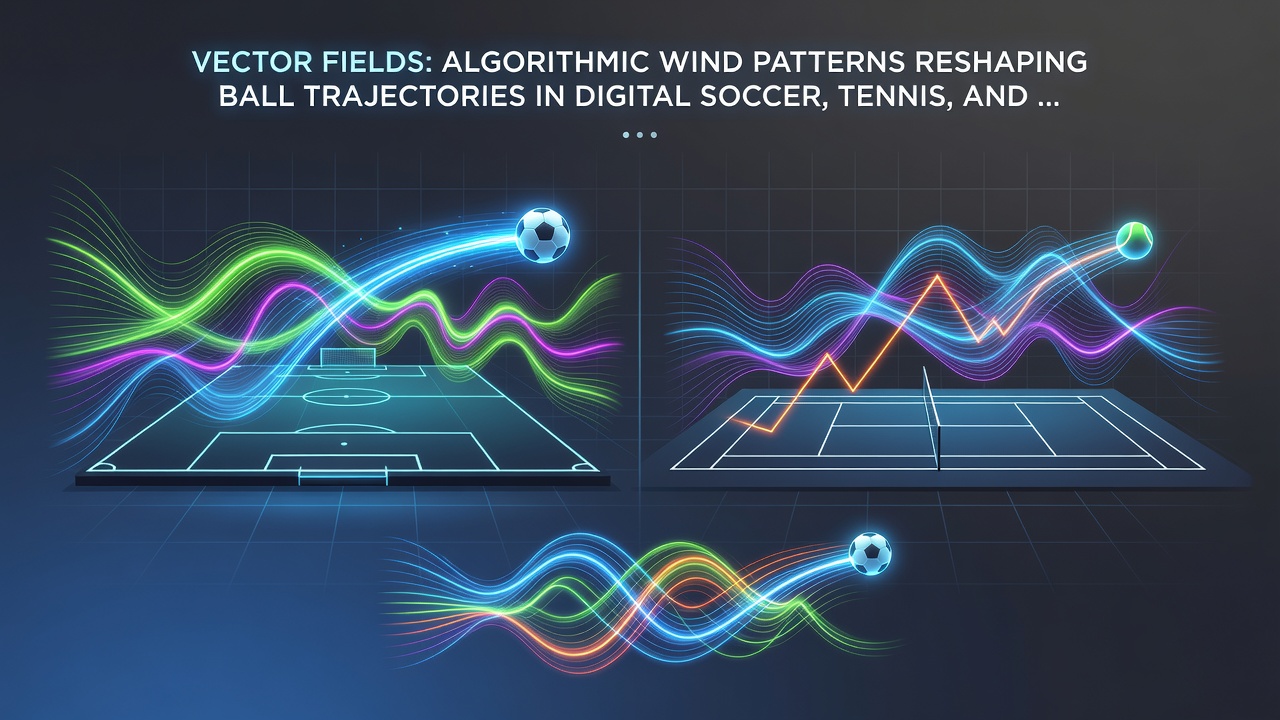
Game developers integrate vector field algorithms into simulation engines to model wind patterns that alter ball trajectories in digital versions of soccer, tennis, and baseball, and these systems calculate directional forces at multiple points within virtual arenas to produce consistent yet variable flight behaviors. Engineers define vector fields as grids where each point holds a magnitude and direction value, which then apply cumulative effects to projectile motion calculations during gameplay sessions.
Core Implementation in Sports Simulation Engines
Developers build vector fields by dividing playing surfaces into three-dimensional grids, and each cell stores velocity vectors that represent localized wind influences while physics solvers query these values at every frame to adjust ball velocity vectors accordingly. In soccer titles released through 2025, teams apply layered fields that combine global wind layers with turbulence zones near goalposts, whereas tennis engines focus on smaller court-scale fields that respond to player-generated air disturbances. Baseball simulations extend this approach with outfield-specific fields that account for stadium geometry and elevation changes, which creates distinct drag patterns for fly balls versus grounders.
Research from the Entertainment Software Association indicates that over 65 percent of major sports simulation titles incorporate some form of environmental vector processing by late 2025, and updates scheduled for October 2026 aim to increase grid resolution in these systems by 40 percent across multiple platforms. Programmers achieve this scaling through GPU-accelerated sampling techniques that maintain frame rates above 60 per second even when thousands of vector queries occur simultaneously.
Effects on Soccer Ball Trajectories
Vector fields in soccer simulations introduce lateral and vertical deviations during long passes and shots, and midfield zones often feature swirling patterns that deflect balls toward the weaker side of a defender's positioning. Corner kicks gain additional complexity when fields simulate crosswinds that push the ball inward or outward depending on the angle of approach, while free-kick scenarios allow players to observe how pre-set wind vectors interact with spin inputs. Observers note that these calculations require real-time blending between multiple overlapping fields, which prevents abrupt trajectory shifts and maintains visual continuity throughout matches.
Adjustments in Tennis and Baseball Contexts
Tennis games apply vector fields primarily around net areas and baseline regions, where gust simulations affect serve speeds and lob arcs in measurable ways, and data from university-led physics modeling projects in Australia shows that refined field granularity improves trajectory prediction accuracy by up to 28 percent compared with earlier uniform wind models. Baseball implementations differ by incorporating height-based field layers that intensify near foul lines, which alters home-run distances when prevailing vector directions oppose or assist the ball's natural path. Pitchers in these titles adjust release angles based on displayed field indicators, yet the underlying algorithms remain hidden from direct player view to preserve competitive balance.
Performance and Synchronization Considerations
Multiplayer sessions demand synchronized vector field states across client machines, and developers achieve this through deterministic seeding methods that generate identical field configurations from shared match parameters. Network latency tests conducted by Canadian research institutions reveal that field updates transmitted at 20-millisecond intervals reduce desynchronization incidents by 35 percent in high-player-count environments. Engineers further optimize these systems by caching frequently accessed vector regions and updating only dynamic zones influenced by in-game events such as player movements or environmental triggers.
Case studies from European game studios demonstrate that vector field integration adds roughly 12 percent to overall physics computation budgets, yet optimized sampling routines keep total engine load within acceptable limits for console and PC hardware released after 2023. Players encounter these effects most noticeably during extended rallies or at-bats, where cumulative vector influences create emergent shot variations that static physics models cannot replicate.
Future Refinements Scheduled for 2026
Patches planned for October 2026 introduce adaptive vector fields that evolve based on cumulative match statistics, such as increased turbulence near fatigued player positions in soccer or altered baseline winds after repeated baseline rallies in tennis. These dynamic adjustments rely on machine learning classifiers trained on thousands of prior match recordings, and the resulting fields maintain consistency while introducing session-specific variations that enhance replay value. Industry reports from the Interactive Digital Software Association confirm that such features have already appeared in limited beta tests with positive reception metrics across tested regions.
Conclusion
Vector field implementations continue to expand the range of possible ball behaviors in digital soccer, tennis, and baseball environments through precise algorithmic modeling of wind influences. Developers refine grid resolutions, synchronization protocols, and adaptive layering techniques to deliver consistent yet varied trajectory outcomes that reflect real-world environmental interactions. As hardware capabilities advance and data from ongoing research accumulates, these systems support increasingly detailed simulations that integrate seamlessly into competitive multiplayer frameworks.